
Stretching is a simple yet powerful way to keep your body feeling healthy and flexible. Whether you want to relieve muscle tension, improve your posture, or make daily movements easier, adding stretching to your routine can make a big difference. Best of all, you don’t need a gym or special equipment — you can do most stretches at home. This beginner’s guide will help you get started with safe and effective stretches that suit your lifestyle.
Why Stretch at Home?
Stretching at home offers many benefits, including:
– Improved flexibility: Regular stretching increases your muscles’ range of motion.
– Reduced muscle tension: Stretching helps alleviate stiffness and soreness.
– Better posture: Stretching can correct muscle imbalances caused by sitting long hours.
– Increased blood flow: Stretching increases circulation, which supports recovery.
– Convenience: You can stretch anytime without needing special gear.
Starting a home stretching routine lets you tune into your body’s needs and develop a habit that supports your overall health.
Getting Started: Stretching Basics
Before you jump into specific stretches, here are some key points to keep in mind:
– Warm up first: Stretching cold muscles can cause injury. Spend 5 minutes walking or doing light movement to warm up.
– Slow and steady: Ease into each stretch gently. Avoid bouncing or pushing too hard.
– Breathe deeply: Relax your body by breathing slowly and deeply during each stretch.
– Hold for 15-30 seconds: This duration allows your muscles to lengthen safely.
– Listen to your body: Mild discomfort is okay, but never stretch to the point of pain.
– Stretch both sides: Always stretch both limbs evenly to maintain balance.
Essential Stretches for Beginners
Here are some easy stretches that target major muscle groups and can be done anywhere in your home.
1. Neck Stretch
This stretch helps relieve neck and shoulder tension.
– Sit or stand tall.
– Slowly tilt your right ear toward your right shoulder.
– Hold for 20 seconds, feeling a gentle stretch along the left side of your neck.
– Repeat on the other side.
2. Shoulder Stretch
To open up tight shoulders:
– Bring your right arm across your chest.
– Use your left hand to gently press your right arm closer to your chest.
– Hold for 20-30 seconds and switch sides.
3. Cat-Cow Stretch (for spine flexibility)
This gentle flow loosens the spine.
– Start on hands and knees with your wrists under shoulders, knees under hips.
– Inhale, arch your back dropping the belly toward the floor (Cow pose).
– Exhale, round your spine upward, tucking your chin (Cat pose).
– Repeat for 5-8 breaths.
4. Seated Hamstring Stretch
To stretch the backs of your thighs:
– Sit on the floor with legs extended straight.
– Keep your back straight and hinge at the hips to reach toward your toes.
– Stop when you feel a stretch and hold for 30 seconds.
– Avoid rounding your back excessively.
5. Quadriceps Stretch
To stretch the front of your thighs:
– Stand near a wall or chair for balance.
– Bend your right knee, bringing the heel toward your buttocks.
– Hold your ankle with your right hand and gently pull.
– Hold for 20-30 seconds and switch legs.
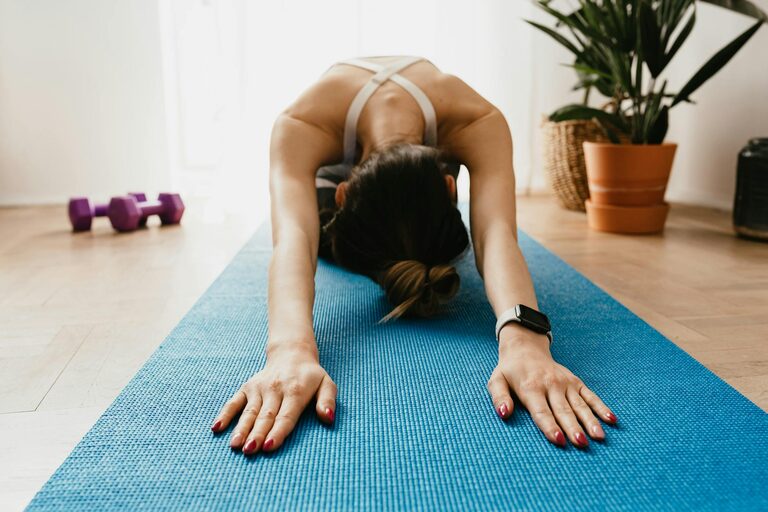
6. Child’s Pose
This relaxing stretch targets your lower back and hips.
– Kneel on the floor, sit back on your heels.
– Reach your arms forward and lower your forehead to the floor.
– Hold for 30 seconds or longer, focusing on deep breathing.
Tips to Stay Motivated
Building a stretching habit can be rewarding with these simple strategies:
– Set a routine: Stretch at the same time daily — morning, evening, or after a workout.
– Create a calming space: Use a mat, soft music, or natural light to make stretching enjoyable.
– Combine with other activities: Stretch while watching TV or listening to podcasts.
– Track your progress: Notice improvements in flexibility or reduced muscle tightness.
– Be patient: Flexibility takes time, so celebrate small gains.
When to Be Careful
While stretching is generally safe, some situations require caution:
– Avoid stretching injured or painful areas until healed.
– Consult a professional if you have chronic health conditions.
– Modify stretches if you feel sharp pain or dizziness.
– Start slowly if you have limited mobility.
In Summary
Stretching at home is a great way to improve your body’s flexibility, reduce stress, and support daily comfort. With just a few simple stretches practiced regularly, you can enjoy a more relaxed and limber body. Remember to listen to your body, warm up properly, and stretch gently to prevent injuries. Start today with these beginner-friendly stretches and build a foundation for lasting wellness.